Massoud Hayoun LOS ANGELES, USA, b. 1987
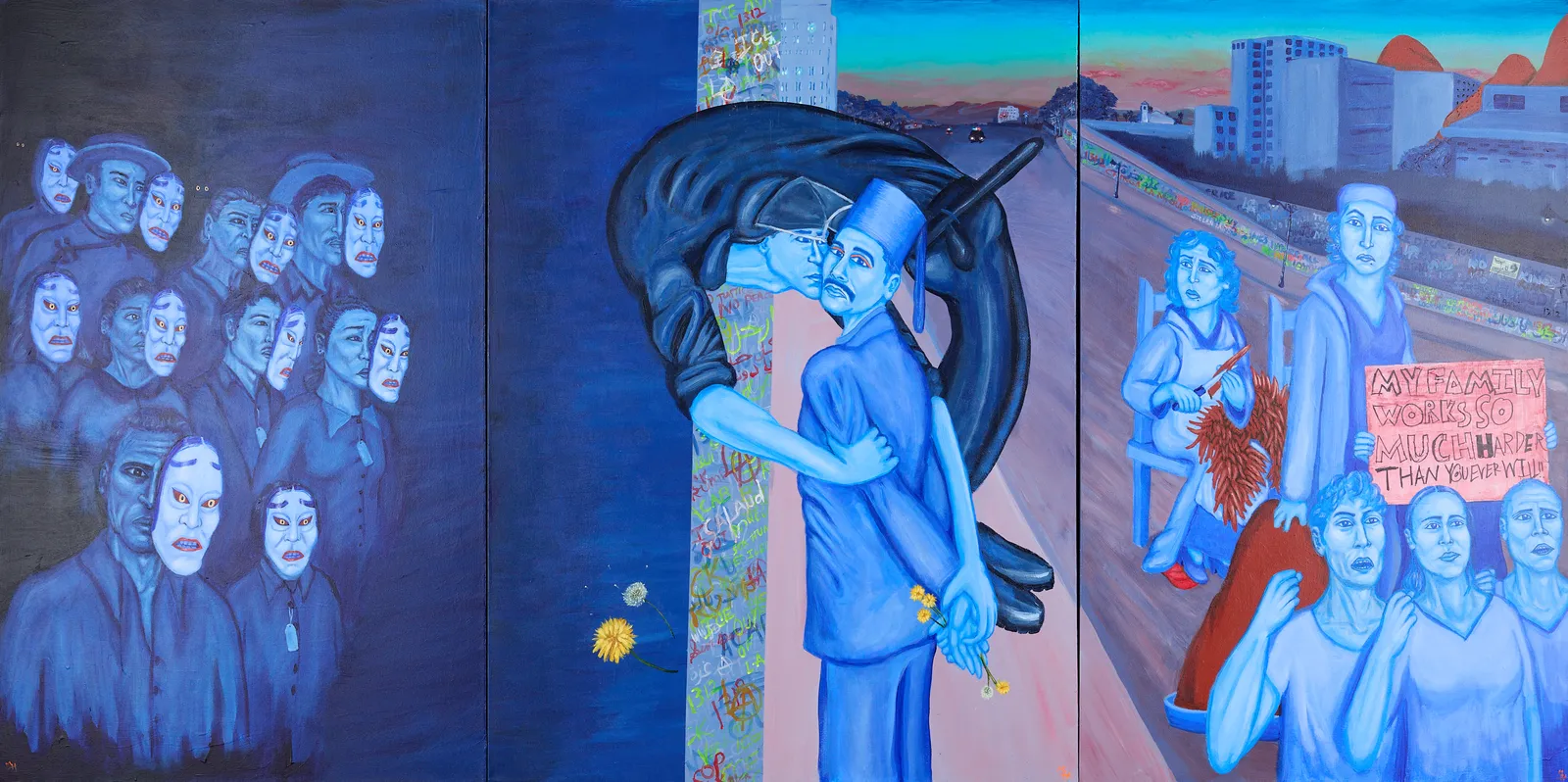
409pc - Failure to Disperse (Triptych), 2025
Acrylic on canvas
48 x 95 5/8 in (overall dimensions)
122 x 243 cm
122 x 243 cm
Copyright The Artist
In June 2025, Hayoun joined a peaceful protest against ICE raids in his hometown of Los Angeles. Very quickly and without warning, he and a group of fellow protesters were...
In June 2025, Hayoun joined a peaceful protest against ICE raids in his hometown of Los Angeles. Very quickly and without warning, he and a group of fellow protesters were arrested for “failure to disperse”. Shortly before he was led away by the police, Hayoun noticed a sign on the floor which subsequently found its way into the right-hand panel of this triptych, alongside a stamp from his grandfather’s collection, a portrait of his grandmother and rising mountains of harissa, Hayoun’s recurring symbol of resistance.
The left panel of the triptych draws upon the long history of newcomers to the USA; generations of people from all over the world who have built new lives in spite of frequent harassment by the authorities. The wall Hayoun was handcuffed against lies as the crossroads of Little Tokyo, Olvera, and Chinatown. The artist remembers “as I was staring at the wall…I thought on all the Angelenos from before. I imagined them watching from the darkness.” His figures wear the mask of the crone from Noh opera, an old woman believed to haunt the man who wronged her even from the grave.
The central panel reimagines the power dynamic between Hayoun and the officer who arrested him, their meeting now a moonlit tryst that laces “failure to disperse” with a different kind of longstanding rebellion. In Hayoun’s hands are flowers as fresh as Pablo Neruda’s timeless quote “You can cut all the flowers but you cannot keep Spring from coming”.
The left panel of the triptych draws upon the long history of newcomers to the USA; generations of people from all over the world who have built new lives in spite of frequent harassment by the authorities. The wall Hayoun was handcuffed against lies as the crossroads of Little Tokyo, Olvera, and Chinatown. The artist remembers “as I was staring at the wall…I thought on all the Angelenos from before. I imagined them watching from the darkness.” His figures wear the mask of the crone from Noh opera, an old woman believed to haunt the man who wronged her even from the grave.
The central panel reimagines the power dynamic between Hayoun and the officer who arrested him, their meeting now a moonlit tryst that laces “failure to disperse” with a different kind of longstanding rebellion. In Hayoun’s hands are flowers as fresh as Pablo Neruda’s timeless quote “You can cut all the flowers but you cannot keep Spring from coming”.